Remembering the Radar Gang, 1944-45: Innovations
that Saved Lives
By Edward W. Biro, radar mechanic, 513th Squadron,
and daughter Diana Biro
Many of the paper records of the 376th Bomb Group were destroyed
in 1945 when a cargo net containing them fell into the
Bay of Taranto during the loading operation. Our research
has found very little in the published literature or
on the web about the use and development of high-altitude
radar during WW II. So we are pleased to relate my personal
experiences with innovative radar strategies at the
376th—technical achievements that we believe contributed
significantly to the war effort and saved American lives.
Radar = Radio detecting and ranging:
a device or system that emits radio waves and processes
their reflection for display, used especially for detecting
and locating objects or surface features.
Background: Ramping Up the
Radar Operation
In April 1944, after a year of intensive training in radio
electronics and then radar by the Technical Training
Command stateside, I arrived at the 376th air base in
Italy. The army had paired me with one of my radar classmates,
Robert Darby, and we were assigned to this field just
outside the small village of San Pancrazio, in the ‘heel’
of the Italian ‘boot.’ Our mission was high-altitude bombardment
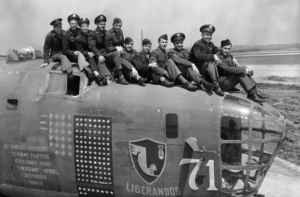
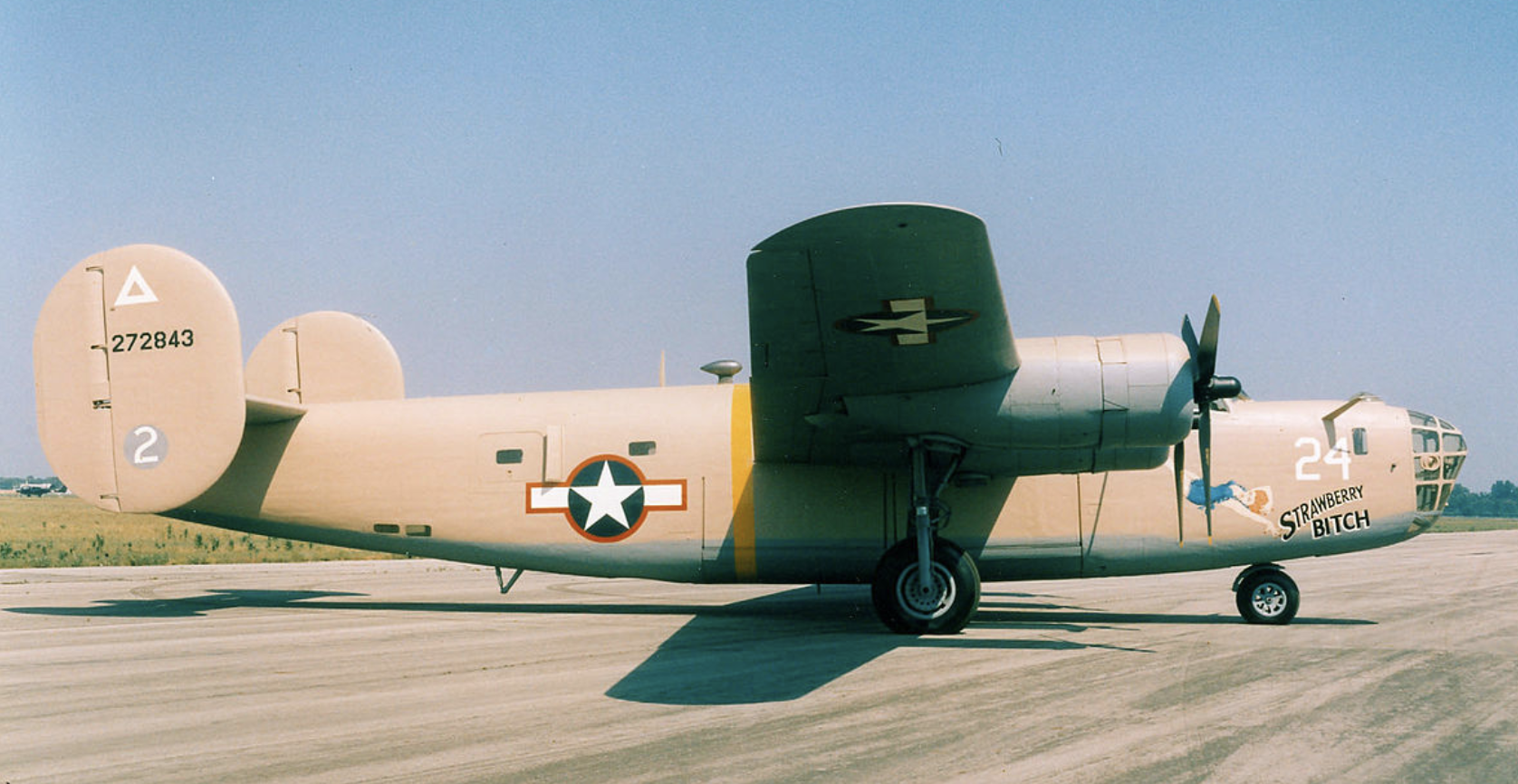
(HAB) with B-24 (Liberator) airplanes. High-altitude
radar was relatively new in the European theater, and
at the time only a small percentage of our B-24s had this
radar. Though those planes were stationed at various bases,
they all had their radar equipment serviced at the 376th,
which was then the central base for maintaining aircraft radar.
HAB radar had yet to prove itself in the field. In early 1944,
radar sets had a very low reliability record: barely 5%
of them would operate for an entire bombing flight.
Darby and I were assigned a tent and a few days later met
the radar gang, including radar C. O. Lt.
Davis Cooper (later promoted to captain), first
sergeant Stanley Allaback, and shop technician Carl
Schimmelman. The operation itself was pretty simple.
The ‘line men’ would go out to those planes that had
radar and test-run the radar set through a prescribed
procedure. Any malfunctioning unit was brought to the
radar shack, where the more experienced shop technicians
would perform the repair. The radar shack was also used
by the radar navigators as a classroom to discuss problems
and operation with the radar technicians and to familiarize
the newly arrived navigators with our procedures. I worked
up to shop (radar) technician rather quickly, since the need
was great and there were few qualified personnel. Other
radar mechanics joined our group during 1944. I particularly
remember Earl Watson, who worked with me on the same
shift and became a personal friend. Many radar guys who
reported to the 376th were later reassigned to other
fields, since the use of radar technology was growing
and the air force was expanding its servicing system.
The ‘shack’ was a stone building in the middle
of the field, a few hundred feet from the runway. A security
group occupied the first level, and the second, much smaller
level housed the radar shack proper. It had a few benches,
oscilloscopes, multi-meters and hand tools. The power
(28-volt DC) for testing the radar sets came from one
of three wagon-mounted gas-driven generators (called Waukeshaws
after their manufacturer) on the ground with a long
extension up to the window and into the shop. The generators
were also used by the line men to supply power to the
plane while doing the test runs. Since we had only three
of them, we had to share as needed: to power up the aircraft
and repair the radar sets in the shack. We also had a
small gas-driven generator (110 volts) for the lights
and general power. With this sparse equipment we all went to
work.
Neither Lt. Cooper nor the radar mechanics were satisfied
with this primitive set-up, however, so we quickly began
making changes to improve our procedures. Additional
benches were built and a more efficient bench repair
and test operation was implemented. The radar antenna
was installed on the roof for greater coverage. A room
was set up to organize and store all our spare parts and
components. Separate areas were designated for the repaired
(green tag) units and the ‘to be repaired’ (red tag) units;
the red tags had to explain the problem the line man had
found, and he was required to sign the tag. The green tag
was signed by the shop man who repaired the unit. A log
was kept for all red- and green-tagged units. We also ‘obtained’ two
dedicated 28-volt gas-driven generators, releasing the ‘Waukeshaw’
for line use.
The radar group was also unhappy with the low reliability
of operational radar equipment in B-24 airplanes. We all
wanted to do much, much better to support the navigators
and crews on their bombing missions. So both as a group
and individually, we examined problems, weaknesses,
and areas of failure, then did what we could to bolster
radar performance. An early problem, for example, was
fuses blowing during flight, which would disable the
radar. Reaching the fuse block in its original position
to change a fuse was impossible for the crew in flight, so
we relocated the block to make it accessible for the navigators,
who could then replace fuses as needed.
By the time we left Italy in April 1945, our radar team’s
record for radar sets operating reliably during entire flight
missions had climbed to about 95%, and radar had proved
itself a valuable technical tool for carrying out successful
high-altitude bombing missions.
The next three sections describe specific innovations that
emerged out of collaborative discussions between the
radar technicians and navigators of the 376th, who got
together for joint problem-solving as they became familiar
with one another’s concerns. The radar team (techs and
navigators) then implemented these techniques with some
assistance from other members of the bomb group. The time
frames represent my best recall and may need some adjustment;
the technical details and the order of these strategic
developments are accurate accounts of what transpired.
The Radar Camera
Developed in June/July 1944
Before the summer of 1944, the training sessions for new navigators
consisted mainly of the physical procedures. We radar
techs would outline the several different switches and
the order and timing of their use, as well as where the
fuses were and how to change them. But we could not show
the trainees actual radar screen images of ground scans
from the air. That was a problem to be addressed: the
experienced navigators wanted examples of actual radar
screen images. The radar image on the screen was similar
to a map in relief of the terrain below and it took some
practice to learn how to interpret it.
To get real radar images for navigator training, an American
civilian whom Lt. Cooper introduced to us came up with
the concept of using a camera to take “radar pictures.”
He provided a standard Kodak reconnaissance camera
body (no lens—just the focal plane shutter and the
film transport section), and after discussing the requirements
with others, I designed the mechanical aspects and electrical
wiring needed to integrate the camera with the radar
set. Next, I fabricated an adapter and mounted it on
the radar remote scope. Then I used a signal from the
radar set to trigger the camera so it would take sequential
pictures at approximately 1- or 5-minute intervals. The resulting
photos gave a radar record of the flight, and the experienced
navigators used them in the training sessions as actual
images, which they explained how to interpret. I secured
more material and built about a dozen of these camera
adapters. As we used and refined this technique, our radar
navigators photographed many bomb runs and the radar images
of many targets.
One evening in August 1944 we were very busy checking out
the radar equipment. The orders were that every available
plane was to be ready for flight early the next morning.
It was obvious that something out of the ordinary was
happening. The flight crews were starting the engines
as the last radar plane was checked out at about 3:00
a.m. We buttoned up things at the shop and retired to
our squadron areas, had breakfast, and went to bed as
the planes were taking off.
We awoke about noon and after lunch the planes
returned. It was then that we learned of the invasion
of southern France. The films from the radar cameras
were rushed to field photo as the flight crews were
abuzz with their stories of the invasion. When we got
the radar pictures, we could see the coastline of southern
France and the many ships in the Golfe du Lion, off
the Mediterranean Sea. This major assault was certainly
a turning point in the war.
The radar photos were very clear, though in ‘relief,’ and
the navigators came up with another plan. Why not photograph
all of Europe for a full radar map? So the aircraft
mechanics altered one
B-24 by removing all the armament, then painted
it black and put flash-hiding baffles on the turbo superchargers.
The navigators mapped out a flight plan grid and the
‘Black Beauty’ took off every night with a radar navigator
aboard. Over a period of about a week, we had all of
Europe on film. The photo shop put all the pictures together
in a montage, and we then had an excellent piece of training
material.
Radar/Bombsight
Coordination
Developed in September 1944
One day a few navigators were discussing a scrubbed (canceled)
bomb run. The crews had been briefed and the planes
had taken off early that morning as scheduled. But as
they approached enemy territory, the target area was obscured
by clouds and the bombardier could not set up the bombsight
so the mission had to be scrubbed. Everyone was disappointed:
they counted missions—35 missions and they rotated back
to the States—and scrubs didn’t count.
The navigators started brainstorming to resolve the problem.
They had noticed that, since the radar sets were not
affected by the clouds, they could see the target area
clearly. Located on the flight deck, the navigators had
all the necessary data (angle of declination, azimuth,
etc.), and they wondered how they could get that data to
the bombardier in the nose of the plane. After some discussion
they devised a simple method by using the plane’s intercom.
The navigator would talk to the bombardier, who would set
up the bombsight accordingly. They prepared a few mock runs
on ‘targets’ to our south (Allied controlled), and the
bombardier left the lens cap on the bombsight telescope
so he could not see the target. At the start of the bomb
run, the radar navigator gave the bombardier the initial
information to set up the bombsight. Subsequent checkpoints
were relayed and corrections made to the bombsight as needed.
As the plane approached the ‘target,’ the bombardier removed
the lens cap, and as he peered into the telescope, he was
dead on.
After a few more trials, the idea of using radar data to set
up the bombsight was presented to operations officers
and was approved. Since the enemy knew we wouldn’t bomb
haphazardly—that is, we wouldn’t bomb on cloudy days—there
would be no alert to scramble the enemy’s anti-aircraft
forces, thus reducing the risk to our men.
Colonel Graff, the Commanding Officer of the 376th Bomb Group
at the time, flew the lead radar plane on one of the
early missions on a cloudy day. He later reported (as
I heard second-hand): “The clouds were so thick we couldn’t
see the ground below. The strangest thing was we were
supposedly over the target area, and we had no flak. Then
the bombardier called out over the intercom: ‘Bomb’s away,
let’s go home!’ It was hard to believe we’d completed the
bomb run without encountering any enemy fire.”
The next day the photos from the reconnaissance planes showed
a direct hit on the target. This innovation certainly
gave us an advantage and would shorten the war.
Glide Bombing
Developed in late 1944
On another occasion, the discussion among the radar techs
and navigators focused on what could be done to avoid enemy
flak. We had lost many planes and crew to enemy fire,
which was quite accurate. We had chaff (a tinsel-like
material that reflected radar waves) that was thrown out
of the planes in an attempt to confuse enemy radar, but
apparently the German anti-aircraft defenses compensated
correctly. One of our radar navigators, Lt. Hill, presented
a novel idea. Whether he came up with this concept himself
or heard about it elsewhere I don’t know, but our radar
group developed and implemented this strategy for our later
bomb runs.
The conventional bomb run would start at a given altitude
and maintain that altitude to the target area. The problem
was that the enemy’s front-line defenses would track
our planes and radio back to an Axis command center the
altitude, direction, number and type of planes along with
the time. That information enabled the enemy to plot our
flight path and alert the perimeter (target area) defenses
in time for them to set the anti-aircraft fuses to the
correct altitude so they would be ready for our attack,
which made our men sitting ducks as they approached the
target.
Lt. Hill suggested a change. Instead of maintaining a constant
altitude on the bomb run, our planes would fly to the
target at a consistent glide of 2% to 5%. The glide would
increase the speed of the plane as well as change its
altitude, which would confuse enemy defenses. It would
take some recalculating to adjust the bombsight to compensate
for the change in the angle of declination and the accelerated
speed of the plane due to the glide. So out came the
paper, pencils and slide rules. In a short time the
radar navigators created a corrected table for four
different glide patterns: at 2%, 3%, 4% and 5% slopes.
The first mission to use this new technique
returned the next day with no missing planes, and
the navigators and crews were in a joyous mood, talking
excitedly. On the bomb run, close to the target, the
flak was high and behind all the aircraft. The enemy’s
front-line defenses had radioed an alert on the altitude
of our planes before they went into the glide pattern.
Their target defenses knew the speed the planes were
capable of and had prepared for an arrival time based
on the conventional altitude pattern. But in the glide
pattern the planes approached the target earlier than anticipated,
since their speed was accelerating and the altitude
was decreasing. (See Figure.) This change in the bomb
run confounded the enemy defenses, and the flak missed
all our planes.
By varying the glide pattern we could keep the enemy guessing
and reduce the danger to our airmen. This strategy,
which we used for the balance of the war, cut our losses
dramatically.
Postscript
Since the HAB radar story of World War II has not received
much attention, I am eager to make sure that this piece
of history is preserved and the 376th gets due credit
for the innovative technical strategies its radar team
developed. I invite anyone who participated in, witnessed,
or heard about these activities or related technical
developments to contact me so we can expand the narrative.
Ed Biro
Edward William Biro passed
away on August 28, 2006. Ed Biro was a retired
engineer who lived in Gardiner, NY. His daughter Diana Biro is a research
development and writing consultant at Syracuse University.
Diana Biro would like to hear from anyone who knew her father or who can
add to the high-altitude radar story of the war. Please feel free to contact
her at (315)446-0490 or:
djbiro@syr.edu
Ed Biro's memoirs has been published in the June 2007 issue of the historical
magazine America in WWII. The article, titled "Putting Eyes in the
Sky," is in this issue's "I Was There" column, which features first-person
accounts of the war years. It's a greatly expanded version of the memoir
that appears above, with more personal anecdotes and background details.
|